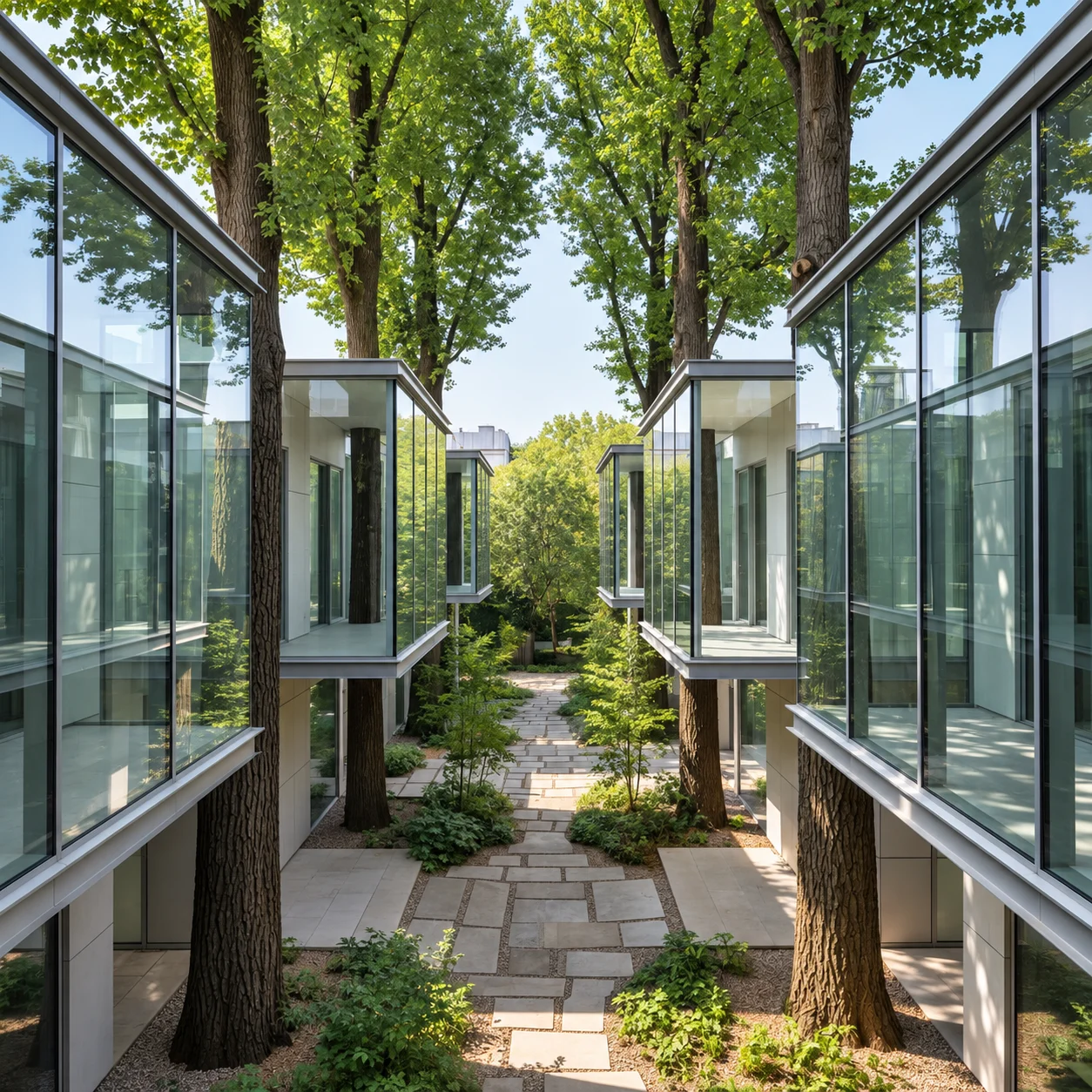
Can we build cities on trees?
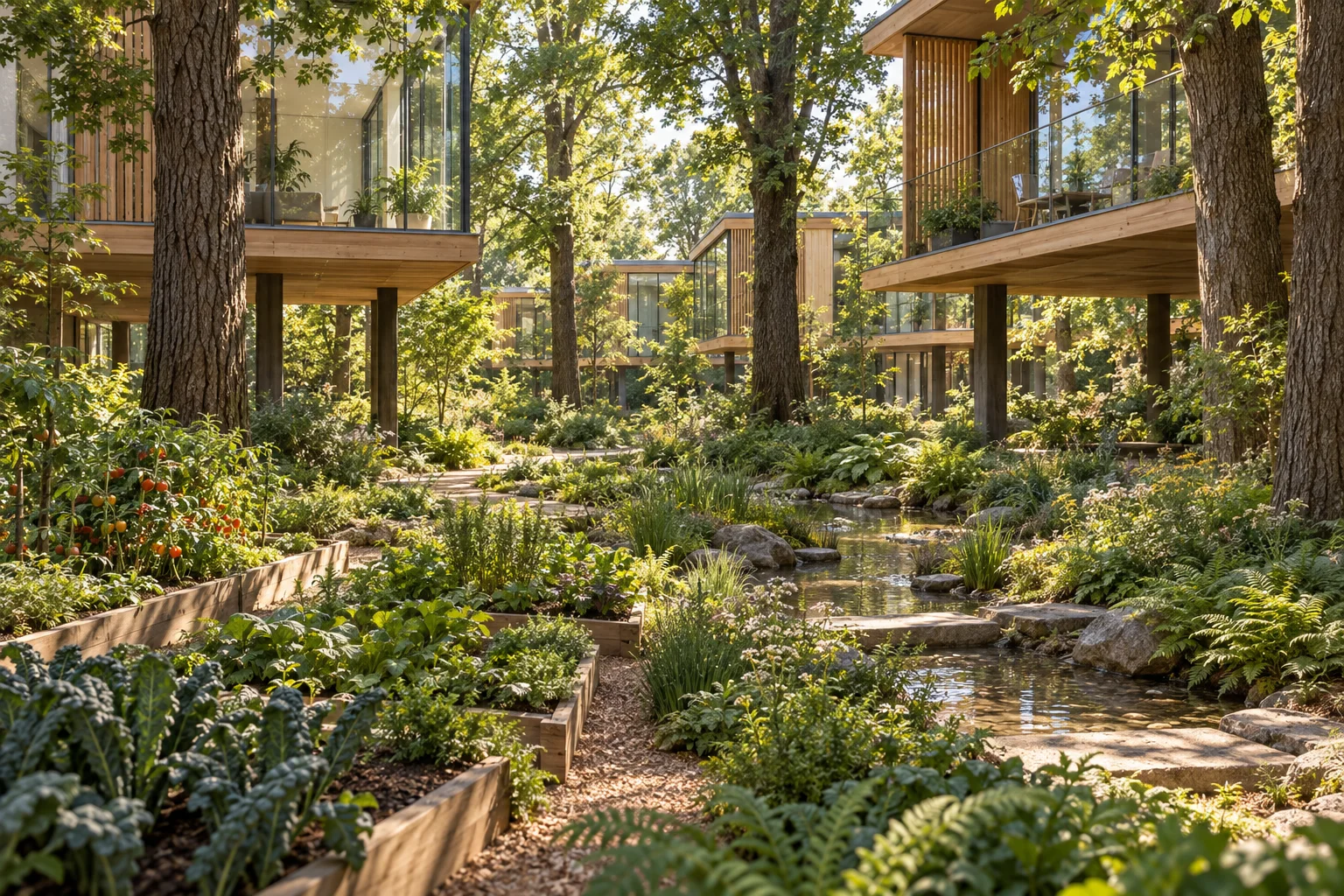
Drevograd is a proposal for modular habitats integrated with the living grid of tree plantations. Its feasibility has not yet been tested.
Early concept · Feasibility untestedCities with a longer tomorrow
Fig. 1Tree-integrated residential volumes along a planted walkway.
AI-generated concept image.
01 · Demand
Would people want to live there?
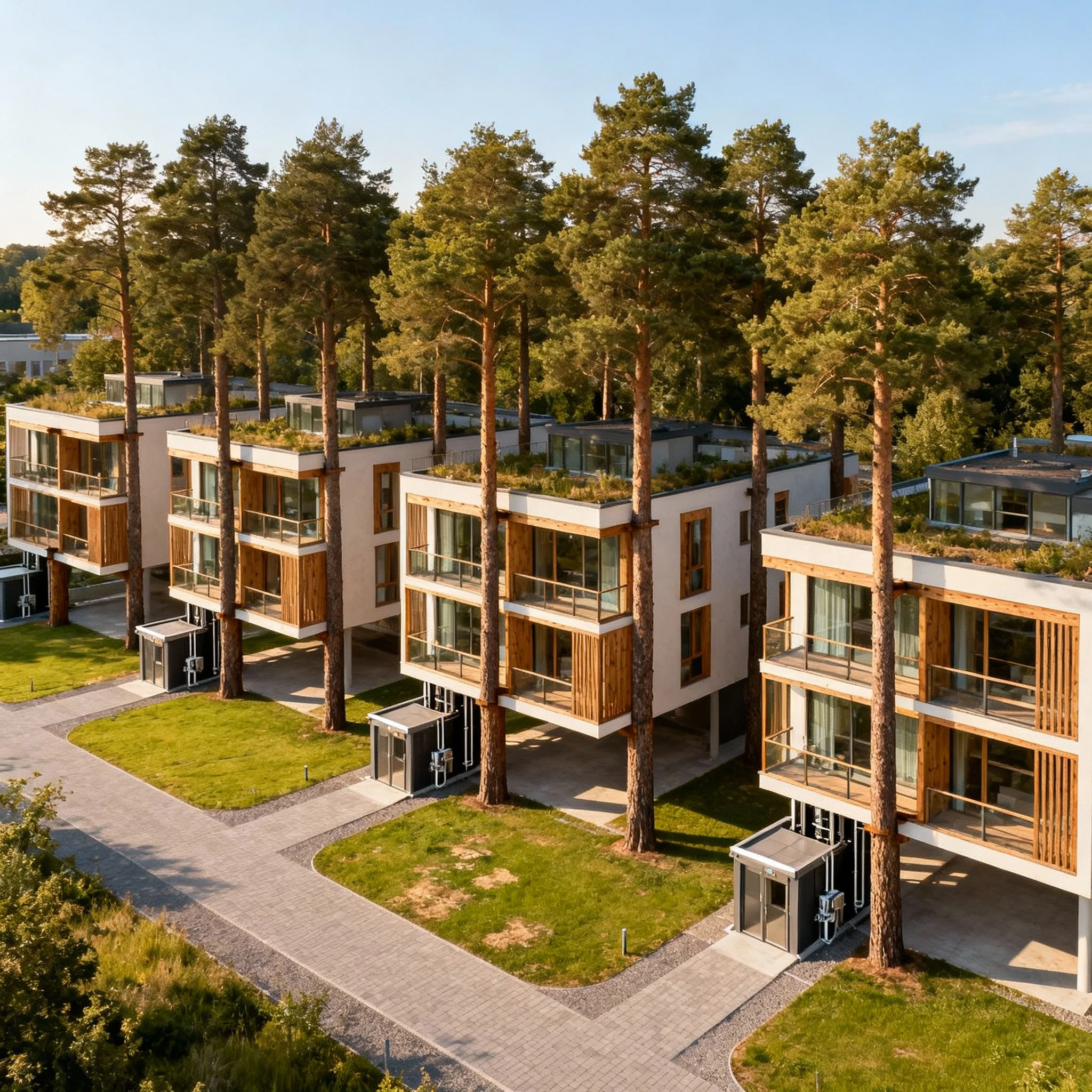
The concept only matters if tree-integrated neighbourhoods can become places people actively choose: restorative as a park, compact and useful as a city block.
- Would it feel like a park and a city block at once?
- Would people choose it?
- Would they pay to live there?
02 · Structure
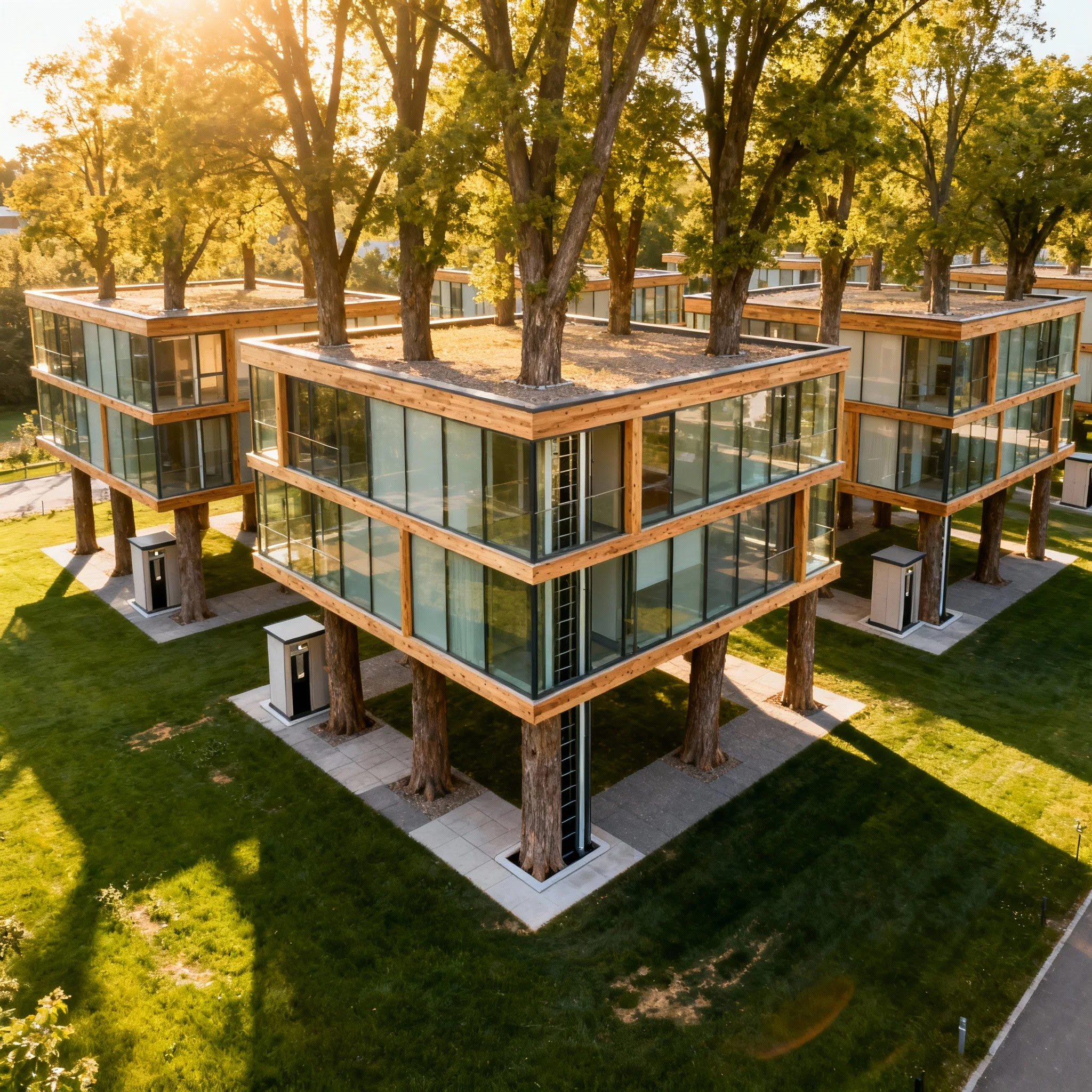
How much building could living trees safely support?
The answer depends on species, age, geometry, movement, connections and time. No tree-integrated load-bearing arrangement has yet been validated.
- Which tree species and ages could participate?
- Which lattice could remain stable over time?
- How many storeys, if any, could be supported?
03 · Delivery
Could it be built and maintained affordably?
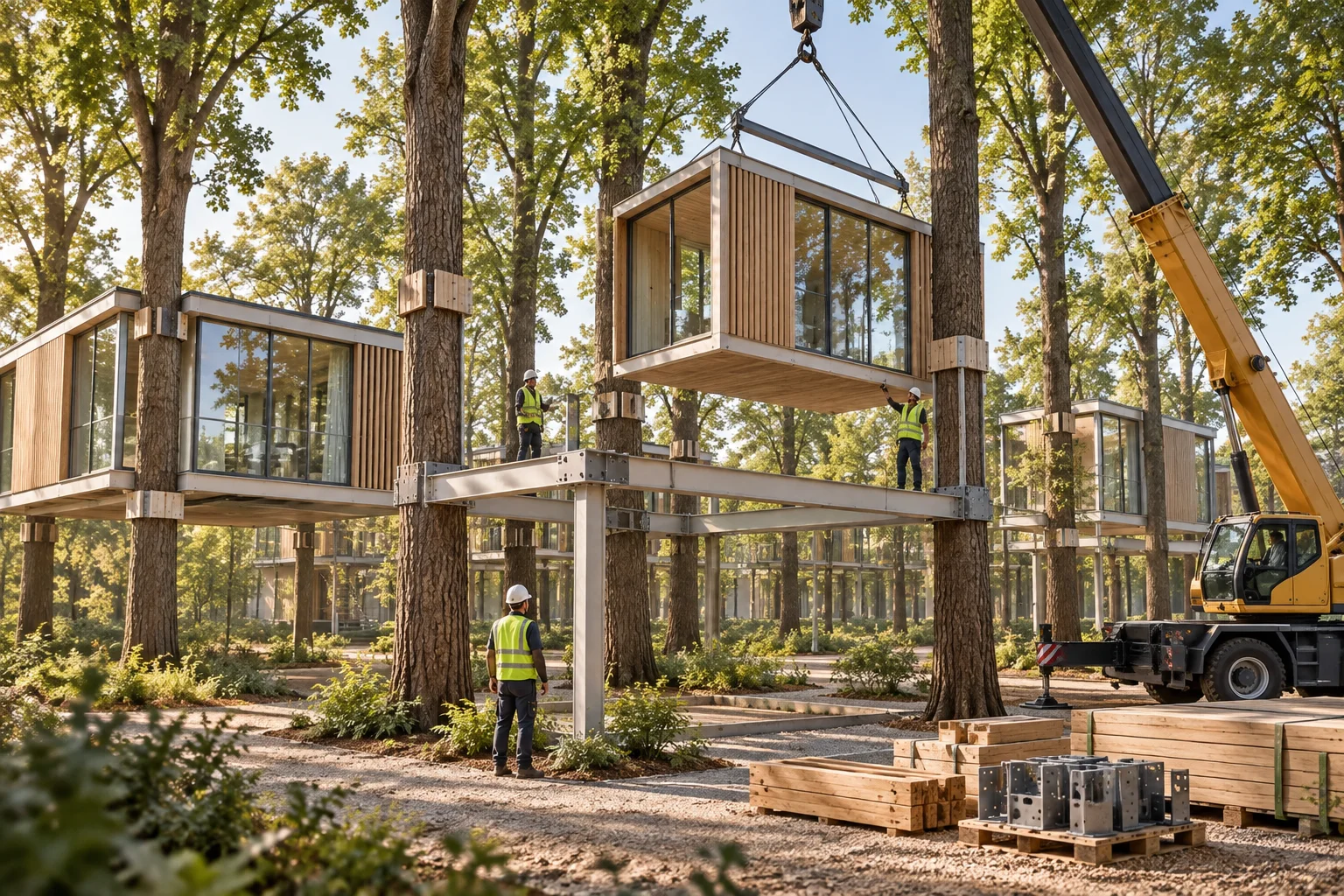
Research must test whether modular components, host land, regulation and long-term maintenance can form a viable delivery model.
- Can modularity reduce time and cost?
- Can local timber be used responsibly?
- Would municipalities support experimental development?
04 · Ecology
Can buildings and productive ecosystems thrive together?
A credible system would need buildings, forestry, cultivation and local resource cycles to strengthen rather than diminish one another.
- Can wind become useful local energy?
- Could food grow beneath or between buildings?
- Can water and nutrients circulate safely at local scale?